
Quick Answer
AC running but not cooling in Tampa? Work the checklist: setpoint, dirty filter, thawing a frozen coil, and a blocked outdoor condenser.
Start here before you book service
- ✓ Set the thermostat to cool and lower the setpoint by at least three degrees.
- ✓ Replace a dirty filter and let a frozen coil thaw with fan-only mode.
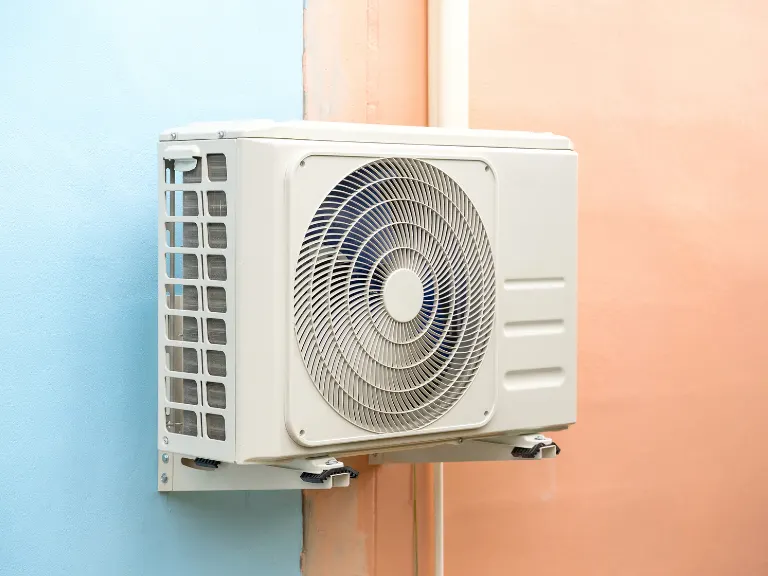
- ✓ Check the outdoor condenser for leaves, blocked airflow, or a silent fan.
- ✓ Call for diagnostics if the system runs but the supply air still feels warm.
Sounds like you need a tech?
(813) 395-2324When the thermostat reads 78° but the house feels like 85°, your AC isn't just underperforming - something specific is broken or restricted, and every hour the system runs without cooling is wear you don't get back. This guide walks through the checks a Tampa homeowner can safely do in ten minutes, the likely culprits we see during June through September across neighborhoods like Tampa Palms, Cross Creek, and Heritage Isles, and honest dollar ranges for the repairs that typically fix it.
First, rule out the simple stuff
Before assuming the worst, spend five minutes on the basics. About one in three "not cooling" calls we run in 33647 and 33637 end up being a thermostat setting, a tripped float switch, or a filter so loaded we can't see light through it.
Pull the filter and hold it toward a window. If it's gray and matted, that alone can drop a 3-ton system's capacity by 15 to 20 percent and ice the indoor coil. Swap it for a fresh 1-inch pleated filter or the deep media cartridge your system was built for. Then set the thermostat to COOL, drop the setpoint at least three degrees below room temperature, and switch the fan from ON to AUTO so room-temperature air isn't constantly being recirculated between cooling cycles.
Walk outside to the condenser. It should be humming with the top fan pulling air straight up. If it's dead silent while the indoor blower is running, the most likely causes are a tripped breaker, a failed start capacitor, or a float switch that's shutting the system down because a clogged condensate drain triggered the safety.
The usual suspects in Tampa homes
Once the easy stuff is ruled out, the diagnosis almost always lands in one of four buckets: a failed capacitor, a refrigerant issue, a frozen evaporator coil, or a condensate drain backup. In older Tampa Palms and Carrollwood homes, add "undersized or leaky return duct" to that list - we find crushed flex return runs in attics more often than you'd think.
Start capacitors are the single most common summer failure we swap. They sit in the outdoor unit and give the compressor and fan motor the kick they need to start. When the 40/5 μF or 45/5 μF can swells or reads low on the meter, the outdoor unit either hums without starting or the fan runs while the compressor stays off. The part is inexpensive and the job runs $150–$350 for a standard swap including diagnostic time.
Low refrigerant means a leak somewhere - R-410A doesn't get "used up" during normal operation. If the copper suction line is icing over or the system is short-cycling, we pressure-test, find the leak, and either repair it or discuss whether the age of the equipment justifies the repair. An R-410A recharge after a repair usually runs $350–$900 depending on system size and how much charge was lost. Homes still on R-22 are increasingly hard to justify repairing - the refrigerant is phased out and pricing reflects that.
Rule of thumb: If your outdoor unit is silent but the indoor blower runs, check the breaker and listen for a humming sound at the condenser. Humming without spinning means a capacitor - a $150–$350 fix. Dead silent usually means a breaker, contactor, or low-voltage control issue.
When to shut the system off immediately
A few symptoms mean stop running it now and wait for a tech. Ice on the copper suction line or a visibly frozen indoor coil will slug liquid refrigerant back to the compressor - that's how a $300 repair becomes a $2,400 compressor replacement. Turn the thermostat to OFF, leave the fan on AUTO, and let it thaw for at least two hours before calling.
Burning smells, visible water pooling around the air handler, or a breaker that trips the moment you reset it also warrant shutting the system down. Tampa's summer storms regularly blow contactors and surge-damage control boards, and a breaker that won't hold is telling you something is shorted downstream.
Anyone in the home with a heart condition, a newborn, or respiratory issues should move to the coolest part of the house - usually a tile-floored interior room - and run fans while you wait. Tampa indoor temperatures can climb from 78° to 90° in under three hours on a mid-July afternoon.
Honest pricing on the common fixes
Pricing varies with access, brand, and whether parts are under warranty, but these ranges cover what most Tampa homeowners pay when we diagnose and complete the repair in the same visit:
- Capacitor replacement: $150–$350
- Contactor replacement: $180–$320
- Condensate drain clear and treat: $150–$275
- Float switch replacement: $160–$260
- Condenser fan motor: $450–$850
- Blower motor (ECM): $600–$1,400
- Refrigerant leak repair + R-410A recharge: $600–$1,600
- Thermostat replacement (basic to smart): $180–$450
- Compressor replacement (out of warranty): $1,800–$3,500
If the equipment is 12+ years old and the repair is north of $1,500, it's worth asking for a replacement quote alongside the repair. A modern SEER2-rated system with R-454B or R-32 refrigerant will cut operating cost noticeably, and financing options spread the investment over manageable monthly payments.
What a diagnostic visit actually looks like
When we arrive for AC repair in Tampa, the first thing a tech does is take a full set of measurements before touching a wrench: static pressure across the filter and coil, temperature split between return and supply, superheat and subcool at the line set, capacitor microfarads under load, contactor coil resistance, and amp draw on the compressor and fan motor. Without those numbers it's a guessing game, and guessing on someone else's equipment is how homeowners end up paying for parts they didn't need.
If the issue is urgent and the house is heating up fast, we prioritize same-day dispatch for urgent AC repair calls that come in before noon during business hours. Most calls from Tampa and Hillsborough County - Tampa Palms, New Tampa, Brandon, Westchase - get a two-to-four-hour window the same afternoon.
After the repair we retest: temperature split should be 18° to 22° at a properly charged system, static pressure should be under 0.8 inches water column on most residential setups, and the drain should flow cleanly when we pour a cup of water down the primary line. You get a written summary of what was measured, what was replaced, and what to watch for.
If your system is running but the house still feels warm after basic checks, it's worth having Tim and the team take a look before a small issue becomes a compressor job. Call (813) 395-2324 - same-day diagnostic slots usually open across Tampa when we hear from you before lunchtime.

Tim founded I Care Air Care in 2010 after 30+ years in the Tampa Bay HVAC trade. EPA Universal certified. The source for all technical guidance published on this site.
Read Tim's full profile →Related local help
These pages connect this guide to the services and local areas homeowners usually need next: