
.webp "Tim Hawk, Owner - I Care Air Care")
When a ductless mini-split is the right tool
A mini-split installation is not a replacement for a well-designed central system in most homes; for whole-home comfort, our HVAC installation and AC replacement pages cover ducted systems. But for the specific problems ductless solves, nothing else comes close. These are the five scenarios where we recommend it without hesitation:
- Garage conversion or workshop: a 12,000 BTU single-zone head turns a 400 sq ft garage into a usable office, gym, or shop for roughly $4,200 installed.
- Sunroom or bonus room: a west-facing glass sunroom in Lutz or New Tampa can run 15 degrees hotter than the house. A dedicated 18,000 BTU head fixes what duct extension cannot.
- Mother-in-law suite or ADU: the cleanest way to condition a 300 to 800 sq ft accessory unit without tying into the main system.
- Addition or second story: a dedicated head keeps your original system in its sweet spot instead of overstretching the ductwork.
- Whole-home ductless: for older homes with no ductwork, a 3 or 4-zone system conditions the whole house with zero duct construction.
- 4.9★ · 700+ Google reviews
- Licensed · CAC1816515
- EPA 608 Universal Certified
- 16 years serving Tampa Bay
- 4,000+ homes served
- 1-year workmanship warranty
Tampa Bay sizing rules we actually use
Manufacturer charts assume national-average climate. Florida is not average, so we size for a 94-degree design day, 78-degree dew point, and 2,200 annual cooling hours. The head you need is usually one size larger than the square-footage chart suggests:
- 9,000 BTU: 300 to 450 sq ft, a well-insulated bedroom or office with one exterior wall.
- 12,000 BTU: 450 to 650 sq ft, a living area with two exterior walls or an east-glass sunroom.
- 18,000 BTU: 700 to 950 sq ft, an open living-kitchen combo or a west-facing sunroom.
- 24,000 BTU: 950 to 1,300 sq ft, large open spaces, usually one zone in a multi-zone install.
These are starting points, not quotes. The real load depends on ceiling height, insulation, windows, orientation, and internal heat gain, so we run a short Manual-J on every quote, the same calculation behind our Wesley Chapel AC installs.
Got a room that never gets cool?
Tell us about the space and we will tell you whether a single head solves it or whether the fix is somewhere else. In-home assessment, no pressure.
A Florida garage runs hotter than its square footage suggests
Garages are the most common ductless request we get after additions, and they are also where sizing goes wrong most often. A Wesley Chapel or Tampa garage carries heat loads that a bedroom of the same footprint never sees:
- Uninsulated block walls: most Florida garages stop at bare concrete block, no batt and no foam, so the wall stores afternoon heat and releases it into the room until well after sunset.
- A west-facing metal door: an uninsulated steel overhead door in full afternoon sun acts like a radiator for the last four hours of daylight. On most west-facing garages it is the single largest load in the space.
- Attic heat pressing down: garage ceilings are usually uninsulated too, with a very hot attic sitting directly above the drywall.
- Leakage at the door track: the gap around an overhead door never seals the way a wall does, so outdoor humidity keeps arriving all day and the head has to work on latent load, not just temperature.
On an August afternoon we routinely measure garages 15 to 25 degrees above the conditioned rooms on the other side of the wall. Added together, those loads push the capacity you need a full size above the square-footage bands above, so we shift one band up for any attached garage:
- Two-car garage, roughly 400 to 480 sq ft: 12,000 BTU, not the 9,000 BTU the same footprint would take as a bedroom.
- Two-car with a west door or a finished ceiling above a hot attic: 12,000 BTU minimum, and we check the door orientation before committing.
- Three-car garage, roughly 600 to 750 sq ft: 18,000 BTU.
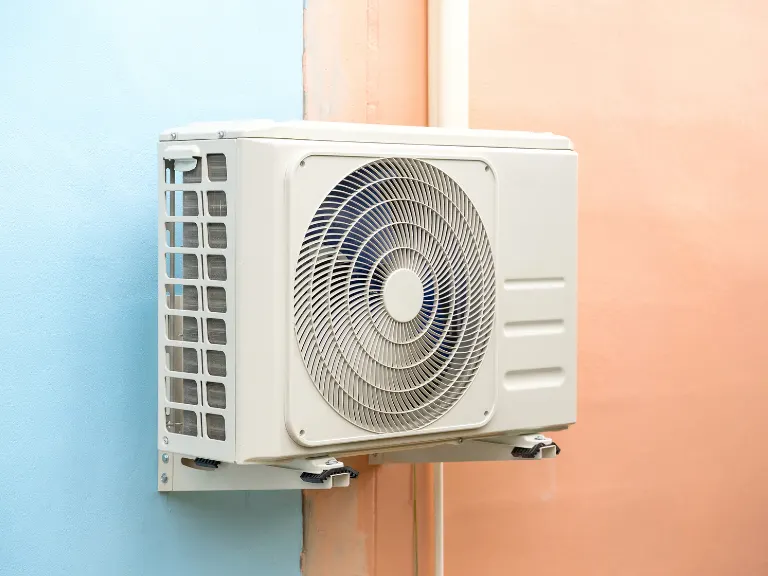
A home gym holds 72 degrees against body heat and equipment on a 12,000 BTU head once the door is shut. A workshop works too, though saw dust means rinsing the filter more often than a living room would need. A home office is the conversion we see most in Wesley Chapel and New Tampa. One limit is worth hearing before you buy: no mini-split cools a garage with the overhead door open. If you plan to work with the door up in July, a good fan does more for you than a compressor will.
Cost lands where the single-zone numbers below land: about $4,200 for a 12,000 BTU head in a standard two-car garage, more if the panel needs a new circuit run out to the space. Adding insulation to the door and the ceiling first will let you use a smaller head and lower the running cost, and we will say so during the assessment rather than sell you the bigger unit.
Brands we install, ranked by Tampa field reliability
These rankings come from the several hundred mini-splits on our maintenance rolls across Pasco, Hillsborough, and Polk counties:
- Mitsubishi Electric: best overall reliability in Florida humidity, strongest parts pipeline, cleanest installs. Our default for most homes.
- Fujitsu Halcyon: very close to Mitsubishi on reliability, often better pricing, excellent multi-zone flexibility.
- LG: strong mid-tier, especially the ArtCool designer heads where looks matter.
- Daikin: solid value, most reliable in the 18k and 24k sizes.
- Gree: the budget end we will install, only when a homeowner understands the slower warranty support.
Whichever brand fits, the repair and maintenance support behind it matters more than the badge, and we service what we install.
“Been with I Care Air Care now for 10 years. Solid company, and the technician today was great.”
What a proper mini-split install includes
A correct install is the difference between a system that runs quietly for 15 years and one that floods your wall or fails its compressor by year four. Nearly every denied warranty claim we have seen traces to one of these steps being skipped:
- Manual-J load calculation before picking capacity, not a square-footage guess.
- Hurricane-rated mount, pad or wall bracket, important across Pasco and coastal Hillsborough.
- Line set in dedicated conduit, not zip-tied along the wall, to protect it from UV and critters.
- Condensate pump where gravity drainage is marginal, the top callback cause on amateur installs.
- Nitrogen purge while brazing to prevent internal oxidation that kills compressors.
- Deep vacuum to 500 microns and a weighed refrigerant charge based on line length.
- Commissioning measurements documented on the invoice, plus the county permit and warranty registration.
Single-zone vs. multi-zone: how to choose
One outdoor unit can run a single indoor head or several. Which makes sense depends on the job:
- Single-zone fits one problem room, a garage, or an addition. It is simpler, cheaper, and the most common ductless install we do.
- Multi-zone runs two to four (sometimes more) heads off one condenser, ideal for a whole home with no ductwork or several rooms that each need independent control.
- The trade-off: multi-zone shares one compressor, so if it goes down every zone goes with it. For a whole-home application we often compare it honestly against a ducted system before recommending either.
The real drawbacks of ductless, and who they actually affect
Ductless does things ducted systems cannot, and it carries four trade-offs that are worth knowing before you spend the money. Here is each one and who it matters to:
- The indoor head hangs on the wall: a wall cassette is about 32 inches wide and sits high on an exterior wall where everyone can see it. Some people stop noticing it in a week. Some never make peace with it. It bothers almost nobody in a garage, workshop, sunroom, or mother-in-law suite, and it bothers plenty of people in a formal living room or a primary bedroom. If the look is the sticking point, an LG ArtCool designer head, a ceiling cassette, or a floor-mounted console solves it for a few hundred dollars more.
- Cost per zone climbs quickly: one 12,000 BTU head runs $4,200 to $5,200 installed. Four zones run $11,000 to $16,000, because each head needs its own line set, its own condensate path, and its own labor. For one or two problem rooms that math is excellent. Past three or four rooms in a home that already has usable ductwork, a ducted system usually costs less and heats and cools more evenly, which is why we compare the two before quoting a whole-home ductless job.
- Multi-zone shares one outdoor unit: when the compressor on a 3-zone condenser fails, all three rooms go warm at once. That is a genuine risk if ductless is the only cooling in the house, and close to irrelevant if the mini-split serves one converted garage while a central system covers the rest. Two separate single-zone systems cost more up front and fail independently, and for some homeowners that is the better trade.
- Filters need attention more often: a central system has one filter at the return. A ductless system has washable filters in every head, and they want a rinse every few weeks through pollen season and after any dusty work in the space. Annual service also runs per head, about 45 minutes each. If nobody in the house will ever pull a filter, that is a real argument against a 4-zone install.
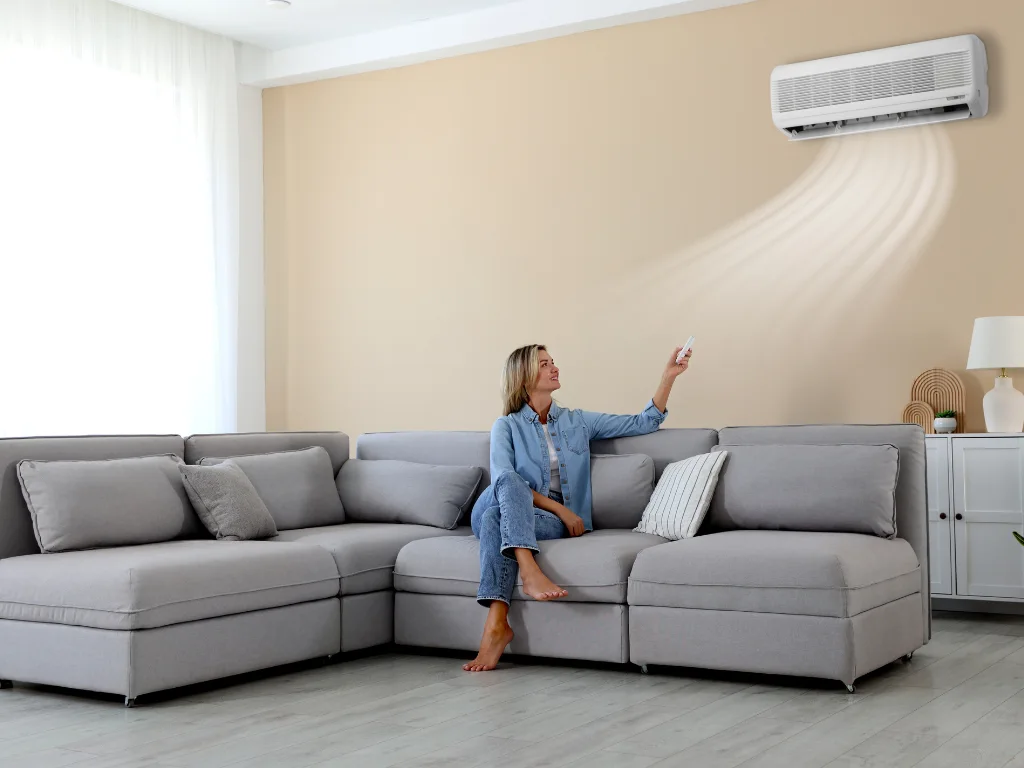
These four are why we talk a few homeowners a month out of a whole-home multi-zone and into a ducted system, usually in a 2,500 sq ft house that already has sound ductwork and closed-door bedrooms. For a garage, a sunroom, an addition, or a suite, none of the four changes our recommendation.
Mini-splits heat too, even in Florida
Every ductless system we install is a heat pump, so it cools in summer and heats on the handful of cold Tampa mornings, all from the same equipment:
- Efficient low-temp heating down well below any temperature Wesley Chapel actually sees in January.
- No heat strips to misconfigure, so a converted garage or suite stays comfortable without a winter bill spike.
- Year-round comfort from one unit, backed by our heat pump repair and maintenance teams if it ever needs service.
Cost ranges for Tampa Bay mini-split installs
Pricing depends on brand, capacity, head count, line length, wall type, and electrical condition. These are typical 2026 Tampa Bay numbers for a clean, code-compliant install with a mainstream brand:
- Single-zone 9k BTU (bedroom / office): $3,800 to $4,500
- Single-zone 12k BTU (living area / sunroom): $4,200 to $5,200
- Single-zone 18k BTU (large room / addition): $4,800 to $5,900
- Dual-zone 18k total: $6,500 to $8,200
- Tri-zone 24k to 36k total: $8,500 to $12,500
- Quad-zone whole home: $11,000 to $16,000
- Electrical service upgrade (if panel is full): $1,200 to $2,400
Every quote includes permit cost, first-year tune-up, and warranty registration, with 0% financing available so a whole-home project does not have to wait.
A surprise repair should not wreck your budget
Qualified homeowners can spread repairs and replacements into low monthly payments with 0% financing through Synchrony. Apply in minutes and decide with zero pressure.

Your first year with a new mini-split
A new ductless system needs a short shakedown, and knowing what is normal saves a needless service call:
- First 30 days: the compressor oil fully circulates and a smart controller learns your schedule, so runtime can be slightly higher while it settles in.
- Month 10 to 12: your included first-year tune-up catches any minor charge adjustment, fan-blade balance, or drain-line sediment before it becomes a problem.
- Year two onward: annual maintenance is quick, about 45 minutes per head, and keeps the 10 to 12-year parts warranty valid.
Keep the head's washable filters rinsed every few weeks during pollen season and the outdoor unit clear, and a quality ductless system runs quietly for well over a decade.
Pair your mini-split with the right controls
A ductless system is only as good as how you run it. Two add-ons make a real difference:
- A smart thermostat or controller for scheduling and humidity-aware setpoints.
- An indoor air quality check, since a converted garage or sunroom often has its own dust and humidity profile.
Ready to talk through a Wesley Chapel, Tampa, or Land O' Lakes mini-split project? Call (813) 395-2324 or request a quote online. We measure the space, review your electrical, and walk you through options before quoting anything.